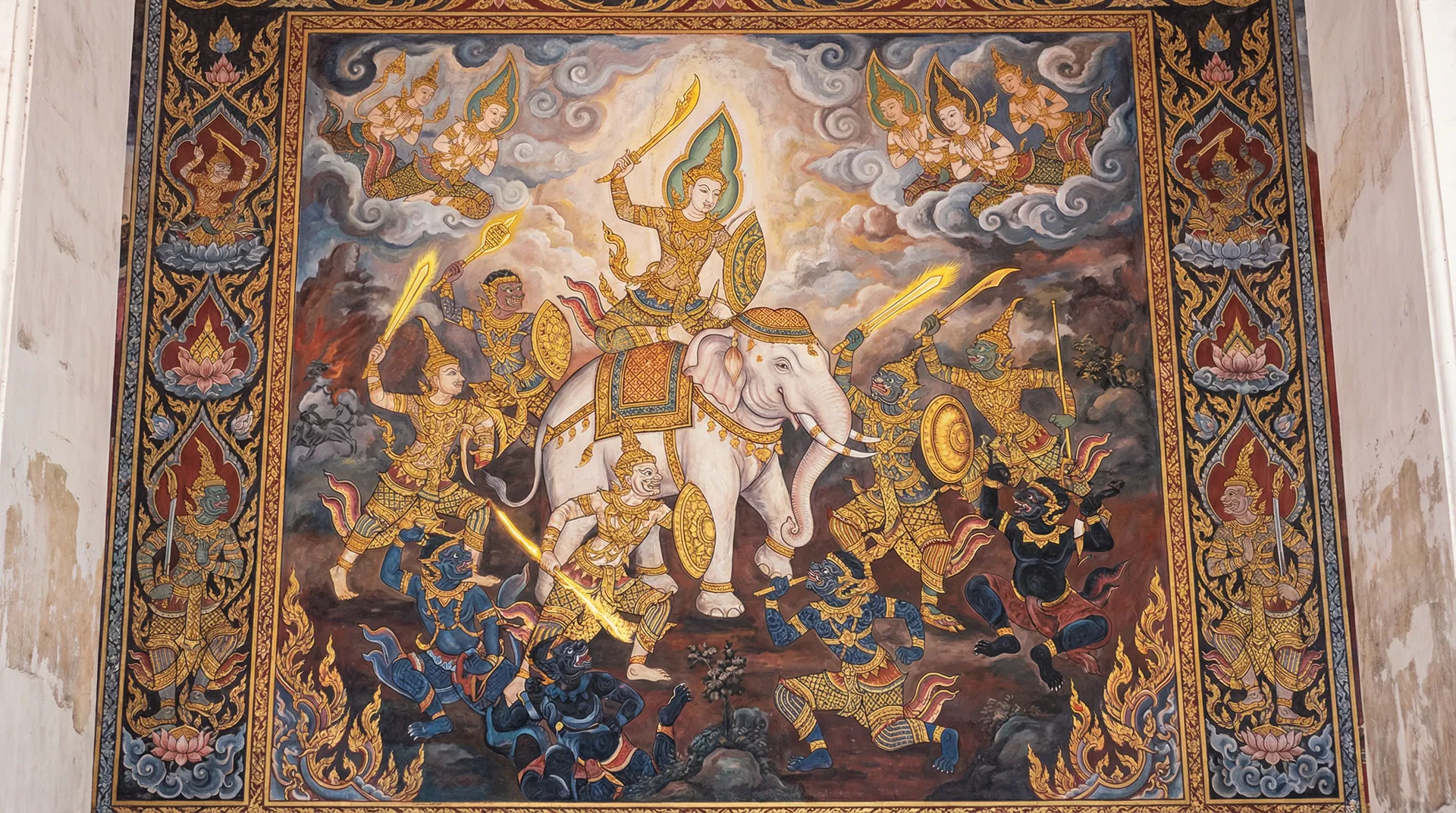
Sutasoma Jataka
Sutasoma Jataka
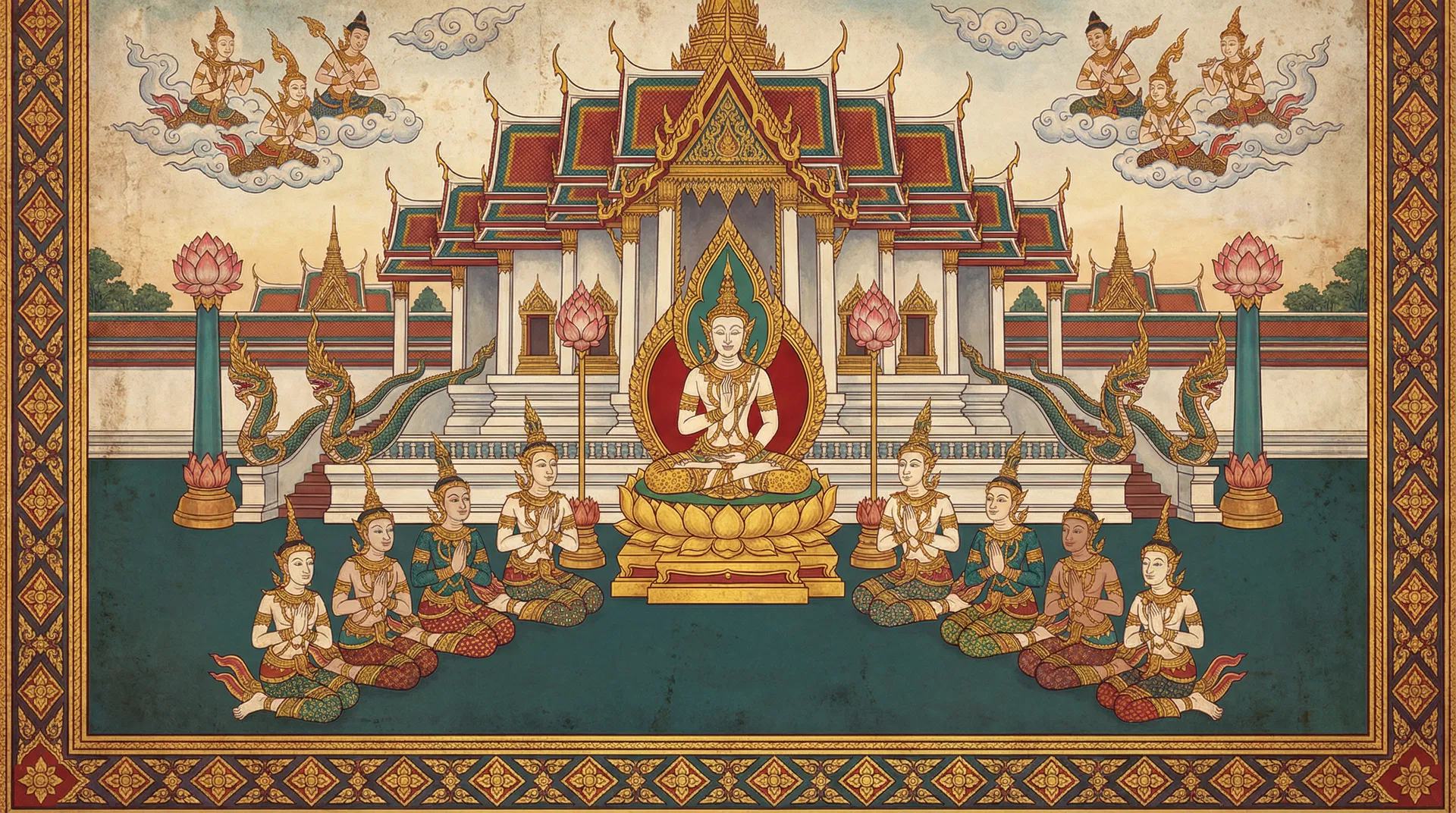
In the ancient city of Indapatta, ruled a benevolent king named Sutasoma. He was known throughout the land for his profound compassion and his unwavering adherence to the five precepts of Buddhist morality. His reign was a golden age, marked by peace, prosperity, and the flourishing of all living beings. However, even in such a utopian kingdom, the shadows of past karma could cast their influence.
One day, a fearsome demon, whose name was Kali, descended upon the land. Kali was a creature of immense power and insatiable hunger, subsisting on the flesh of humans. He had been reborn into this demonic form due to his own past transgressions, and his arrival plunged the kingdom into terror. The demon terrorized the populace, snatching people from their homes and devouring them, leaving behind only trails of despair and grief.
King Sutasoma, heartbroken by the suffering of his people, resolved to confront the demon. He knew that his duty as a king was to protect his subjects, even at the cost of his own life. He summoned his most trusted ministers and advisors. “My loyal friends,” he announced, his voice firm yet filled with sorrow, “our kingdom is under a terrible threat. A demon roams our lands, preying upon the innocent. I cannot stand by while my people perish. I have decided to go forth and face this creature myself.”
His ministers pleaded with him. “Your Majesty, this is madness! The demon is a being of immense power. No ordinary warrior can defeat it. You are our king, our protector. Your life is too precious to risk.”
But King Sutasoma was resolute. “My life is precious only if it can be used to save others. If my sacrifice can bring an end to this suffering, then it is a sacrifice I am willing to make.”
The king, accompanied by a small retinue, ventured into the dark and foreboding forest where the demon was said to dwell. The air grew heavy and cold as they approached the demon’s lair, a cavernous opening in a jagged mountainside. The demon Kali, sensing their presence, emerged with a terrifying roar. He was a grotesque sight, with eyes that blazed like embers and a mouth filled with razor-sharp teeth.
“Who dares to trespass in my domain?” the demon bellowed, his voice echoing through the desolate landscape. “Are you here to offer yourselves as my next meal?”
King Sutasoma stepped forward, his heart filled with a profound sense of peace, not fear. “I am King Sutasoma, and I have come not to fight you, but to understand you. I see the suffering that drives you to such acts. Tell me, demon, why do you commit these terrible deeds?”
The demon, taken aback by the king’s unexpected approach, hesitated. No one had ever spoken to him with such compassion. “I am cursed,” Kali growled, his voice laced with bitterness. “I am bound by my nature, by the karma of my past lives. I must feed on flesh to survive. This is my torment.”
King Sutasoma listened intently. He understood that the demon was also a victim of his own past actions. “I see your suffering, demon,” the king said gently. “But there is another path. You are trapped in a cycle of violence because of your past karma. However, by choosing a different path now, you can break free.”
The demon scoffed. “What path? What can a mortal king offer a demon like me?”
“I offer you a chance for redemption,” King Sutasoma declared. “I will offer myself as your meal, not as a victim, but as a willing sacrifice. If you consume me, with the pure intention of ending your hunger, perhaps you will find peace. And in return, I ask that you vow to cease your predatory ways, to seek a different path, and to live a life free from causing harm.”
The demon was stunned. No human had ever offered such a gift. He looked at the king, whose face radiated a serene compassion, devoid of any fear or anger. Kali recognized the immense purity of the king’s intention. It was a sacrifice born not of desperation, but of boundless love and a desire to end suffering for all.
Overwhelmed by the king’s selfless act, the demon Kali wept tears of remorse. “Your Majesty,” he choked out, his voice trembling, “I cannot accept your sacrifice. Your purity has shown me the error of my ways. I have been consumed by my own suffering, and in turn, I have caused immense suffering to others. I will no longer be a slave to my demonic nature. I vow to cease all harm. I will seek purification and dedicate myself to a path of compassion.”
With that, the demon Kali underwent a profound transformation. The dark aura surrounding him dissipated, and a sense of peace settled over the land. He renounced his demonic existence and began a path of rigorous spiritual practice, seeking to atone for his past deeds through acts of kindness and service.
King Sutasoma, witnessing this miraculous change, returned to his kingdom, not as a warrior who had vanquished an enemy, but as a compassionate king who had shown a lost soul the path to redemption. The kingdom rejoiced, not in victory over a foe, but in the liberation of a being trapped by suffering. The Sutasoma Jataka teaches us that even the most fearsome beings can be transformed by boundless compassion and the willingness to offer oneself for the well-being of others. The king’s act of ultimate generosity, his willingness to give his very life to save his people and redeem a demon, became a legend, inspiring countless generations to choose compassion over conflict.
— In-Article Ad —
💡Moral of the Story
Boundless compassion and selfless sacrifice have the power to transform even the most fearsome beings and to end cycles of suffering, offering a path to redemption for all.
Perfection: Generosity (Dana), Compassion (Karuna), Truthfulness (Sacca)
— Ad Space (728x90) —
More Jataka Tales You May Enjoy
 424Aṭṭhakanipāta
Sarabhaṅga Jātaka
Sarabhaṅga JātakaIn the ancient land of Gandhāra, nestled amidst snow-capped mountains and whisperin...
💡 True peace is cultivated from within and achieved through understanding, compassion, and wisdom, not through violence or the imposition of power. Inner resilience is the greatest defense against external aggression.
 459Ekādasanipāta
Pāṇḍava Jātaka
Pāṇḍava JātakaIn a forgotten era, when the world was young and the gods walked among mortals, there ...
💡 Steadfast integrity, truthfulness, and unwavering loyalty are the strongest defenses against deceit and malice. Inner strength can overcome external threats.
 490Pakiṇṇakanipāta
Sattigumba Jātaka
Sattigumba JātakaIn the bustling city of Savatthi, renowned for its vibrant markets and the wisdom o...
💡 Cleverness, courage, and strategic thinking can overcome brute force, and compassion coupled with an opportunity for redemption can transform even the most hardened adversaries into contributors to society.
 534Mahānipāta
Nimi Jātaka
Nimi JātakaIn the prosperous kingdom of Mithila, there once reigned a king named Nimi, a ruler whose...
💡 The law of karma is absolute: virtuous deeds lead to heavenly rewards, while wicked deeds result in suffering. Understanding these consequences should inspire us to live a life of unwavering righteousness and compassion.
423AṭṭhakanipātaDaddabha Jātaka
Daddabha JātakaIn the verdant kingdom of Mithila, ruled a king named Brahmadatta, a monarch renowned...
💡 Mastery over one's emotions, particularly anger, is a sign of true strength and wisdom. By cultivating patience and mindfulness, one can transform destructive impulses into constructive actions.
 430Navakanipāta
Mahasutasoma Jataka
The Tale of Prince Mahasutasoma In the ancient kingdom of Kasi, nestled beside the sacred River Gang...
💡 True strength lies not in physical might or conquest, but in the power of truth, wisdom, and compassion. Justice and righteous reasoning can overcome violence and tyranny, preserving peace and the well-being of all.
— Multiplex Ad —